


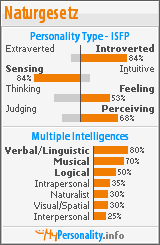
Thomas Becket was born in London in 1118, the son of a former sheriff of London. He was educated and served Archbishop Theobald of Canterbury. He was appointed Chancellor by King Henry II, and in 1162, at Henry's behest, he was made Archbishop of Canterbury. In that position he became a vigorous defender of the freedom of the Church from royal interference — a major issue being the right of the clergy accused of crimes to be tried in ecclesiastical courts rather than civil courts. On December 29, 1170 he was killed in Canterbury Cathedral during the service of Vespers by four knights who had journeyed from France, where the king was, thinking that the murder was what the king desired.
Within three years St. Thomas was canonized, and the shrine containing his remains became a place of pilgrimage from all over Europe, with many reported miracles of healing taking place there. The name Thomas, little used before then, became very popular from then on. When Henry VIII was declared supreme head of the church in England, having pilgrimages to the shrine of a martyr for the liberty of the church from royal interference must have seemed a little awkward. The shrine was destroyed and the bones scattered; and the numerous pilgrimages and reports of miracles ceased.
During a family trip to England in 1987, I visited Canterbury Cathedral. The bloodstains were faintly visible at the spot where St. Thomas fell a short distance inside one of the side doors. As I was leaving the area where the shrine had been and going down the steps into the nave, a tour guide was pointing out the massive rood screen which separates the nave from the choir. He remarked that when the Puritans came to power they destroyed the statues which it had held and added "So if you're Church of Scotland, you have a lot to answer for." To which, having just left the site of the destroyed shrine, I thought, "And if you're Church of England, you have even more to answer for," but somehow I restrained myself from saying it. Maybe the guide was planning to use such a line when they got to the site of the shrine anyway. I hope so. But in fairness it should be noted, as Wiki points out, that the Church of England also venerates Thomas as a martyr, and the Archbishop of Canterbury conducts a service at the site of the former shrine, where a candle is kept burning.
The Wiki article looks like a pretty good summary and includes part of the account by Edward Grim, who was present and wounded as he attempted to shield the archbishop from the first sword blow of the knights. Here's Grim's full account.
An der Grabstätte von Kronprinzessin Cecilie
1 week ago


4 comments:
just stopping by to wish you a happy new year!
Ty — Thanks for the visit and the good wishes. May 2010 be a happy year for you and all those you love, filled with God's blessings.
An interesting post on St Thomas Becket and now I want to read more!
Wishing you a wonderful year!!
@ R. Burnett Baker — Thanks for the good wishes.
I'm not sure when I became interested in St. Thomas Becket. Certainly the movie with Richard Burton contributed to it. And I pretty much satisfied my desire to learn about him with the biography by Richard Winston which is included in the Wiki article bibliography — Winston, Richard (1970), Thomas Becket, New York: Alfred A. Knopf. So that is where I suggest you look for a fuller treatment than an encyclopedia article.
I also have an interesting, but ultimately inconclusive book titled The Quest for Becket's Bones, by John Butler. There was a coffin discovered in Canterbury near the site of Becket's first tomb. It was opened in 1881 and it was found to contain bones, which many assumed were St. Thomas's. But an examination in 1949-51 rather conclusively proved that the bones were not the saint's. But why were unidentified bones buried in such a spot? Could they have been a decoy needed since the actual bones had been saved from destruction and buried there? Are St. Thomas's bones buried below the coffin whose contents were examined but which itself was never removed? But that's beside the point of St. Thomas's life. So start with a biography.
Post a Comment