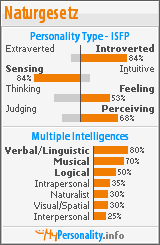
Friday, December 30, 2011

Friends, or at Least, Friendly Acquaintances

     As I mentioned in the recent post titled "BTW," I want to tell you about my time at the Race Committee Holiday Party. (It was on the last Thursday of Advent, but Hannukah had started, so I guess calling it a Holiday Party is legit.) I should also tell about my evening with the priest I mentioned briefly in the third paragraph of this post.

     On several occasions, for example here, I've mentioned that I'm on the Race Committee at the yacht club I belong to. And in the same place that I mentioned the priest, I also mentioned a guy on the Race Committee. I'll call him "Tim," but don't confuse him with a blogger who doesn't use that name on the internet. He's in his late 40's, I think, and single. He started showing up three summers ago on Thursday evenings when we run some small races. For those races, we are ashore at the club, making signals to the racing boats in the harbor. So it was easy for him to join us. He seemed to be interested in talking to me, and we'd generally sit together at the meal that sailors and committee members would have after the races. After that summer he was made an official member of the Committee. He always responds promptly when I need to send an e-mail to Committee members, and last fall, when I sent one asking if anybody would be interested in sharing a table with me for dinner after a Race Committee party, he accepted almost instantaneously.

     So I've been thinking a friendship could develop. Tim was either at the party when my brother (also on the committee) and I arrived or he got there very soon afterwards. We got drinks and chatted. I was telling him about my theater- and concert-going, and he asked questions that showed real interest, I thought. I mentioned having begun my theater attendance with "The Laramie Project." He didn't know what it was so I explained. I figured that was enough of a hint to give him the idea that I was gay-friendly. But so as not to worry him if he's uncomfortable with "gaiety," I then mentioned some others, and he seemed quite interested in a couple. Just when I was ready to ask if he might like to join me sometime, a couple joined us and sat with us for dinner, and I never got the chance to ask that question. Still, I left the party convinced that he wants to be my friend. I don't think I want to officially come out to him, because he lives in this area and I need to be closeted irl, and I don't want a sexual relationship. But since he has never said anything indicating the least sexual interest in women, I think we can have an unspoken understanding. Now I've got to work up the nerve to e-mail him "out of the blue" and suggest going to the theater some time. If I don't do it reasonably soon, this season will have past, and I'll have to wait until next fall. So, strike while the iron is hot.

   Things didn't go quite so well with the priest a week earlier. There was nothing wrong. It was an enjoyable enough evening, but when he asked what I had been doing, I stupidly decided to tell him about my health scare at the end of my retreat. That got him all worried, even though I tried to assure him that it was really more a false alarm than anything else. So I never got to bring up opera and theater, as I did with Tim. Well, at least I'll probably get together with him for dinner sometime next month, and I can explore the possibility of including shows or concerts in our get-togethers.

     I guess I could sum it all up by saying that this month I made a little progress in my social life, a little progress in developing friendships, but not quite as much as I had hoped for.

Thursday, December 29, 2011

Theology of the Body — 2011/12/29

"The first verse Jesus quoted [in his reply to the Pharisees' question about divorce], Genesis 1:27, comes from the first story of man's creation. This version, told in the first chapter of Genesis, places man within a seven-day cycle of creation.


"The first creation story covers the creation of the entire universe, from galaxies and stars down to plants and animals. … [T]here's a steady progression of activity — but then God comes to a pause.

"He looks over all the living creatures he's made and declares them good. Then, God decrees,
'Let us make man in our image, in our likeness, and let them rule over … all the earth'
So God created man in his own image, in the image of God he created him; male and female he created them. (Gen. 1:26-27)

"This first creation story is brimming with theological implications. This is especially true of the way it defines man's relationship to God.

"Man is part of the natural world, but … he is set apart from it. He isn't like the other animals — he alone is made in God's likeness. That's why he is given stewardship over the earth.

"This also explains why man can't be defined in purely naturalistic or materialistic terms. Yes, man is a physical being. But … man can't be explained as a merely physical being — a collection of cells, tissues, and organs. Human beings transcend the categories of chemistry and biology.

"Ultimately, man can only be understood in relation to God. This great mystery of creation — that we are created in God's image — is the key point for understanding all aspects  of humanity, including our sexuality. This is illustrated by the very next verse: 'God blessed them and said to them, "Be fruitful and increase in number; fill the earth and subdue it"' (Gen. 1:28). Thus, to the mystery of man's creation is added the blessing of procreation.

"The first chapter of Genesis is the basis for a Christian understanding of man — it tells the truth about who we are as human beings. It is of the utmost importance to all theology, especially the theology of the body."

Tuesday, December 27, 2011

BTW

First off: Merry Christmas, Day 3.

Those who know me know that I like my bourbon manhattan before dinner.* Occasionally I'll vary it with a Rob Roy, or substitute rye whiskey, Irish on St. Patrick's Day, Japanese on major Japanese holidays, or Haitian rum (to support the nation's economy). But most of the time it's bourbon and sweet vermouth in a ratio of 5:2. For Christmas- and Eastertide I like to have a special bourbon. This year, for the first time, my regular boozery was selling Berkshire Bourbon, from a distillery established in 2007 in Berkshire County in western Massachusetts. The price was high enough that I figured it should be pretty good. I was not disappointed. I've had a few drops unmixed, and the flavor is fairly mild, and it is very smooth. It also makes a very pleasant manhattan.

I hadn't realized that whiskies made outside Kentucky could legally be called bourbon, but I find that any whiskey made in the United States with the proper ingredients and method can properly and legally be called bourbon. Live and learn. So Berkshire Mountain Distillers are "kosher."


*Many years ago I went out to the porch shortly before dinnertime on a cloudy day to look at the weather. When I came back in my mother asked, "Precip?" (short for precipitation, accent on the first syllable) meaning, "Is it  raining?" But I pretended that she had asked, "Pre-sip?" meaning, "Would you like something to drink before dinner?" We liked it enough that for years we called drinks during the "cocktail hour" pre-sip.

I should give you more Theology of the Body, and I also want to tell about the Race Committee party last week, when I was making progress in getting to know one of the newer guys on the Committee. Hopefully I'll get to both very soon.

Monday, December 26, 2011

Merry Christmas — Day 2

First, I wish everybody (belatedly for anybody east of the Atlantic Time Zone) a happy second day of Christmas — which is also St. Stephen's Day ("Good King Wenceslas looked out/ On the feast of Stephen…"), and called Boxing Day in England etc.

Another blogger posted a link to Her Majesty Queen Elizabeth's Christmas Message to the Commonwealth, and I think it's pretty good. I love the fact that, being head of the Church of England, she gets to express her faith.

On the first day of Christmas my brother and I opened presents first thing in the morning, then called our kid brother in Tokyo to thank him for what he sent us and let him thank us for what we sent. My big brother gave me a new microwave oven. The old one was a Sharp "Pint Size" low wattage model which the kid bro and s-i-l gave my mother when we moved here 17 years ago. It was very simple — no control panel, just a dial to turn to set the time you wanted it to run. A while ago, most of the lever you pushed down to open the door broke off, so it was about time to get a new one, but, typically, I had been procrastinating.

I had been to Midnight Mass, but my brother and I were both at the 11:00 Mass Christmas morning.

At 3:00 p.m. went for Christmas dinner to the home of an aunt who lives about a mile away. She is the widow of one of my father's brothers. She's over ninety and has just recently started using a walking stick but is still completely "with it" and looks no older than me. A friend of hers did most of the work on the dinner (roast turkey etc.) but she decided to bake a pumpkin pie, using her mother's recipe, and it was very good. There was another couple there as well. The wife knew my aunt and uncle when they lived in Chicago, 50 and more years ago. The husband knew my dad through their church. There was good conversation— reminiscences, talking about "Kindle," discussing the Occupy movement and other political matters, and hearing about our cousins. We were there for about six hours. When we got home, we called other cousins in Colorado, and chatted for a while. So it was a fairly relaxed day with a large component of family.

Today, since it is the fourth Monday of the month, I cooked three 3 lb. meatloaves and baked 18 potatoes for a soup kitchen in a nearby city. There is a group of us in my parish who do this. When my mother was alive and still able to cook, she did this and often prepared a fourth meatloaf for us. But living alone , I can't use a 3 lb. meatloaf, so I haven't been making an extra. Today, however, with my brother around for the week to help out with it, I did make a fourth, and we ate some of it for dinner tonight. I figure it will make good sandwiches for lunch for several days.

Tomorrow, I'll probably cook some lamb chops, and then on Wednesday roast the turkey I bought before I knew we'd be going to my aunt's on Christmas.

I hope everybody will enjoy the rest of the twelve days of Christmas.

P.S. I've changed the prayer in the sidebar for the first time in over three months.

Saturday, December 24, 2011

Merry Christmas — 2011

I want to wish all my readers a very Merry Christmas and a Happy and Blessed New Year.

Whatever your beliefs, I hope the day and the season are happy for you.

Beyond that, I encourage all my Christian readers to remember the meaning of the day. I know several bloggers I follow have troubles or sorrows which make it difficult to feel happy this Christmas. And the fact that it is Christmas doesn't magically make everything better. But the proof of God's love for us which we see in the birth of Jesus can help to put all the negatives in perspective, I hope.

Wednesday, December 21, 2011

Christmas Shopping

Now that my list of people to shop for has contracted through deaths of some relatives and others moving away, I'm basically left with my two brothers, sister-in-law, and nephew. This year, I'll add my aunt, who has invited me and my big brother to Christmas dinner.

My big brother has a condo with enough stuff already (his statement) so he doesn't really want things that take up space permanently. For several years, I've been giving him a twelve-pack of beer, and he likes that. I used to send my nephew a calendar, but recently I've gotten away from that and just send a check with a Christmas card.

The fun(?) comes with kid brother and sister-in-law in Japan. After spending exorbitant amounts to send things from here for several years, I decided that it makes more sense to order through amazon. I had not trouble ordering a book for my brother. Next, I looked for chocolates to send both of them and discovered that I would be able to get the US branch to ship them to Japan. So I went to amazon.jp. I found some nice chocolates and while I was at it a couple of CD's for my s-i-l. Then I had to register. At one stage they asked me to tell how my name is pronounced. I tried to skip that item, but it came back and insisted I enter my name in hiragana, one of two Japanese phonetic alphabets. Well I don't know hiragana, and I don't know how to get it from our keyboards.

Maybe I could have spent several hours tracking down the hiragana and finding how to type it, but I gave up and went back to amazon in the USA. I found some adequate pot holders and requested 2-4 day delivery (this was on December 19). After I put all the info in, they told me that it would arrive after Christmas — or more precisely somewhere between December 22 and 28.

Well, I wanted to be sure there would be something for her on Christmas day, so I e-mailed my brother and asked him if he could order a CD and the chocolates for me from amazon.jp. No problem, except that the candy would only get there in January some time. So he ordered the CD. I asked him to order chocolates of his choosing, which he did. So all is well. Then I got notification that the pot holders had shipped and estimated delivery was December 23.

Even with the frustrations, it's still better than spending over $100 to ship $40 worth of gifts. And of course, if I hadn't waited until this week, I might have found things at amazon in my country that I could send there and have them arrive in time.

Sunday, December 18, 2011

Theology of the Body — 2011/12/18

As promised, I now turn to the beginning of the "Theology of the Body" book, which gives the background for the sections on lust which I have excerpted in previous posts. We begin with the first talk that Pope John Paul II gave in his series on the topic.


"The family is the first community, the basic building block of society … . It has been so from the beginning.

"The Lord Jesus uses this phrase, 'from the beginning,' in his talk about marriage recorded in the gospels of Matthew and Mark. What exactly did he mean by the 'beginning'?

"Let's take a close look at the exchange between Jesus and the Pharisees.
"Some Pharisees came to test him. They asked, 'Is it lawful for a man to divorce his wife for any reason?'
"'Haven't you read,' he replied, 'that at the beginning the Creator "made them male and female," and said, "For this reason a man will leave his father and mother and be united to his wife, and the two will become one flesh"? So they are no longer two, but one. Therefore what God has joined together, let no man separate.'
"'Why then,' they asked, 'did Moses command that a man give his wife a certificate of divorce and send her away?'
"Jesus replied, 'Moses permitted you to divorce your wives because your hearts were hard. But it was not this way from the beginning.' (Mt. 19:3-8; see also Mk. 10:2-9)
 "Jesus doesn't answer the Pharisees' question on their level. He didn't approve of their legalistic approach …. Instead he refers back to the beginning — to the words of Genesis, which the Pharisees knew by heart. … By going back to God's original plan for marriage, he evades their trap … .

"… The full text of Genesis 1:27, which Jesus summarizes, says, 'So God created man in his own image, in the image of God he created him, male and female he created them' Jesus draws a connection between this verse and Genesis 2:24 — 'For this reason a man will leave his father and mother and be united to his wife, and the two will become one flesh.'

"By linking these two verses and adding, 'So they are no longer two, but one. Therefore what God has joined together, let man not separate,' Christ casts new light on the 'one flesh' union of marriage.

"A man and a woman don't become one flesh on their own, Christ says — God unites them. Marriage is not a mere social institution. It is a holy union instituted by God.


"… By twice referring his questioners back to the beginning, Jesus asked them to ponder deeply the way God created human beings, precisely as male and female.

"Let's put ourselves in the place of Jesus' questioners. But rather than seeking to test Christ, let us meditate on these things, leaning in and looking for wisdom."

Tuesday, December 6, 2011

Doings

Cinema  I went on Monday evening to the Cabot Street Cinema to watch "The Way," a movie about a man (played by Martin Sheen) who walks 800 km on the pilgrim way to Santiago de Compostela, along with three other characters he meets as he goes. It's part travelogue, part explanation of the pilgrimage, and part character development. I'm not sure what I think of it. Maybe I'll think some more. Meanwhile, if it comes your way, I recommend watching it.


This was my second time in that theater. The first time was also for a religion-themed movie set in Spain: "There Be Dragons," about St. Jose Maria Escrivá, mostly during the time of the Spanish civil war.


In a couple of weeks they'll be showing "Anonymous," which pushes the thesis that the works of Shakespeare were written by Edward de Vere, the Earl of Essex. I hope to get to see it. The idea that the author of the works of Shakespeare knew too much to have been the actor from Stratford has always made some sense to me.


Taxes  I just mailed my tax return for 2009 to the IRS. It was finished in draft by the deadline, May 11, 2010, but I got busy with other things and never made the final copy to send in. And since I'm owed a refund there was no urgency, since there would be no interest or penalty for late filing. But recently there has been a series of letters asking for the return. The latest threatened to assess me $9,411.30 in taxes, interest, and penalties on top of the $3,384.00 which had been withheld. The prospect of having to pay them $9,400 when in reality they owe me $1,186 got my attention. So I sent in the return to claim my deductions and adjustments.


Not Done  For the first time in several years, I decided to skip the Handel and Haydn Society's annual performance of Handel's "Messiah." I had a bit of a cold and so I decided not to go to Boston on Friday evening or Sunday afternoon. Instead, I took echinacea and stayed home both those times — which gave me the chance, as reported on my other blog, to listen for the third time in four days to John Harbison's fifth symphony.


I think it was the right decision, even though "Messiah" is the better work IMO. My cold is almost gone, and I should be able to go to Boston on Thursday to see the play "Captors," about Adolf Eichmann and the Mossad agents who have just captured him, as they try to get him to agree to go to Israel for trial.


Shades of Torchy and Setboyardee  Today is one of my two lottery days, so I went to the store where I usually get the tickets. The regular clerk was there. I think he's from India. Anyway, at the end of the usual transaction he wished me good luck and a good evening, smiling, and leaned slightly over the counter toward me. It actually felt, in that instant, as if he were leaning in to kiss me. Absurd, I suppose, and no doubt it says more about me than about him.

Monday, December 5, 2011

Can We Say Disorder?

At the conclusion of our parish's "mission" last week, I had a little conversation with the presenter, on the subject of homosexuality. I suggested that the use of the term "disorder" to refer to homosexual orientation was inoffensive. He finds it objectionable.

The word is found in a document issued in 1986, which in turn refers to one from 1975.The point I want to discuss here is not whether the Vatican is right or wrong to characterize the homosexual orientation as an objective disorder. It is the argument some make that the word "disorder" itself is intrinsically offensive, and therefore the underlying position of the Vatican can be dismissed out of hand.

"3. Explicit treatment of the problem was given in this Congregation's "Declaration on Certain Questions Concerning Sexual Ethics" of December 29, 1975. That document stressed the duty of trying to understand the homosexual condition and noted that culpability for homosexual acts should only be judged with prudence. At the same time the Congregation took note of the distinction commonly drawn between the homosexual condition or tendency and individual homosexual actions. These were described as deprived of their essential and indispensable finality, as being "intrinsically disordered", and able in no case to be approved of (cf. n. 8, $4).


In the discussion which followed the publication of the Declaration, however, an overly benign interpretation was given to the homosexual condition itself, some going so far as to call it neutral, or even good. Although the particular inclination of the homosexual person is not a sin, it is a more or less strong tendency ordered toward an intrinsic moral evil; and thus the inclination itself must be seen as an objective disorder.


Therefore special concern and pastoral attention should be directed toward those who have this condition, lest they be led to believe that the living out of this orientation in homosexual activity is a morally acceptable option. It is not."


First, I'll point out that it can be very convenient not to have to prove that the Vatican is wrong about homosexuality: "They said a bad word, so we can ignore them." Even worse is when people get into a high dudgeon and pretend that by simply using this word the Church proves incontrovertibly that it "hates" homosexuals. Logically, of course, distaste for a word does not disprove the argument of the one who employs it.


Secondly, the word is not offensive anyway. People talk freely about SAD, ADD and ADHD, and nobody finds it offensive to speak of Seasonal Affective Disorder, Attention Deficit Disorder, or Attention Deficit Hyperactivity Disorder.


My point, then, is that if someone wants to make an argument that a homosexual orientation is not a disorder, he can legitimately do so (although I'm not discussing it right here). All I'm saying is that the case against the Vatican position cannot be established simply by objecting to the use of the word "disorder."

Sunday, December 4, 2011

Haggis and a Book (Two Books, Actually)

Last Thursday before the symphony concert, I trekked out to The Haven — which bills itself as "New England's only Scottish restaurant" — for my first taste of haggis. It involved taking the subway past Symphony Hall, and I wasn't sure how long it would take, so I allowed plenty of time. My reservation was for 5:30, and after a ten minute walk from the end of the subway/trolley line, I was outside the restaurant just after 5:00. So I walked around the area until 5:30.

I had the haggis and neeps for my starter. It was pretty good. The haggis reminded me of the meat stuffing I had had on Thanksgiving more than anything else. I was kind of disappointed that it didn't have a stronger flavor of organ meats, but it was enjoyable. For the main course I selected "White Pudding Sassitch and Mash: House-made chicken bread milk sausage with grilled eggplant, roasted farm tomato, herbed mash, roasted chicken jus." I didn't notice any tomato, but under the sausage and mashed potato there was kale, or some such green veggie. The white sausage was spicier than the haggis. It wasn't half bad, but I was getting full, so I didn't finish the veggies so as to leave room for dessert. And dessert had to be that new Scottish specialty, a deep fried Mars bar. It came with a generous mound of whipped cream on the side and was surprisingly good. The fried batter actually went well with the melted chocolate and caramel, and the whipped cream cut the richness of the bar.

The owner, Jason Waddleton — a Scot whose dad and brother work on oil rigs — stopped by my table to get acquainted. He inquired about my book (as Seth had done at Scollay Square). I'm reading Outliers, and I was just reading the chapter about the ongoing feuds in Harlan County, Kentucky, and elsewhere just west of the Appalachians from West Virginia to Georgia and Alabama. The author's thesis is that the people are descendants of a wave of immigrants from the borderlands of England, Scotland, and Ulster, who brought with them an "honor culture," — found also in Biscay, Sicily and elsewhere — which requires a violent response to insults, slights, and injuries. That was rather an unfortunate coincidence, but he took it well; and I at least managed to soften the blow by telling about the Koreans who crashed airplanes because the pilots had a culture which forbade the co-pilot to tell the pilot he was making a serious mistake.

After dinner, I took the bus back to Symphony Hall (20¢ cheaper than the subway) and got there in good time for the concert.

A couple of days ago, I finished reading The Rest Is Noise, about classical music in the context of 20th century history and culture. It's worth reading if you're interested in classical music. I had developed the custom of reading it during dinners alone at home, mainly because I didn't have any other time in which I was getting around to it. Now I should probably select another of my partially read books for reading. Restaurant books need to be the sort of thing you can dip into and put aside at any point when the next course arrives; but at home, I can go for longer passages and stop whenever I want to, because the meal is on the table when I begin reading, and I can read all I want between mouthfuls of food, rather than having to set the book aside when the food arrives.

Wednesday, November 30, 2011

Theology of the Body — 2011/11/30

"The nude body has always been — and always will be — a favorite subject for artists from painters to poets. In Scripture, the nude body is as central subject of the Song of Songs. For Christians, if there is any question whether the naked body is a fit subject for art, the Song of Songs should put it to rest.

"So the question is not whether the body should be described, but how. In the plastic arts … the artist doesn't simply reproduce the model. He expresses his artistic idea about the subject. This gives form to his interior values. In order to give creative justice to the full truth of the body, the artist should be aware of that truth. In other words, an artist should be pure of heart.

"… Through the nude form, [great art] leads the viewer to glimpse the human spirit. Contemplating the human body in art, we are invited to ponder the dignity and beauty of man, in the full truth of masculinity and femininity.

"When the nude body is depicted with dignity … the viewer isn't drawn to 'look lustfully.' Instead, the nuptial meaning of the body is revealed in a way that inspires awe for its God-given glory.

"There are also artistic representations of the body … that offend human dignity. This is not the fault of the … body … but of the way in which it is depicted. To reduce the body to an object for the enjoyment of lust denigrates its true value.

"Artistic morality involves not just the artist but … the viewer, reader, or listener. Just as the responsible artist seeks to portray the human person in the fullness of truth, the responsible recipient strives to appreciate the nuptial meaning of the body depicted in the work. He is … an active seeker of the truth.

" …

"We should always live in a way that affirms the dignity of the body. This applies to all areas of life — personal, social, and cultural. The affirmation of the body is essential for fostering a healthy culture, one that leads the heart toward goodness, beauty, and truth."


This brings us to the end of the second part of Pope John Paul II's Theology of the Body in Simple Language. I began this series of excerpts in March 2010 with the last chapter of Part I., "Body and Gift." From then on, I have been giving excerpts from Part II., "Purity of Heart" because I thought it would be more interesting to see the meaning of the theology for daily life. Now, rather that continuing on to Part III., "Heaven and Earth," I think it would be better to go back to the beginning of the book which gives the premises for what has appeared in Part II.


So my next post in this series will take us back to "The Beginning," which is the title of the first chapter. Meanwhile, if you want to review Part II., you can see all previous posts by clicking on the label "Theology of the Body."

Monday, November 28, 2011

Doings

I know I'm way overdue to post some more Theology of the Body, but a report on Thanksgiving seems a bit more time-sensitive.

In a way, it was the end of an era: the first Thanksgiving since I was born when Thanksgiving dinner did not take place in Naturgesetz family property (grandparent's, parent's, uncle's, family vacation home, or my own). I might have missed one or two when I was in grad school or the monastery, but they've always taken place. This year, however, some friendly acquaintances invited my brother and me to join them and three (it turned out) others at their home, and we accepted.

Since we would also be attending an open house on Saturday evening and my brother would go back to Boston this morning (Monday), I decided it would be pointless to roast even the smallest turkey I could find. We would get at most two meals from it, and then I'd be left with a ton of leftovers. So we had baked stuffed haddock on Friday and broiled flank steak on Sunday. The only special cooking I did for the holiday was a frozen mince pie from the store. It's my brother's favorite kind, and he had it with cheddar cheese for desserts and breakfasts, and finished it off last night. I had a small slice for breakfast on Friday morning. I also had bought a frozen pumpkin pie for myself, but when the time came, I decided that with two main meals away from the house, I couldn't handle it right now, so it will stay in the freezer until Christmas.

Thanksgiving itself was very pleasant. The hosts are a man, originally from Texas and wife, originally from here, who are about my age. One guest was a Baptist missionary from Texas, now living in Ohio — about our age. Another was a thirtysomething man from Argentina, and the last was another thritysomething from around here. We talked mostly about languages (apparently Spanish favors long sentences like those from Melville I heard at Moby Dick a couple of weeks ago), but also about music, the lady's missionary work in Romania, and various other things. The meal was fairly traditional for New England, except for the green beans, the addition of pineapple to the sweet potato, and the pecan pie. It was, however, the first time I ever had meat stuffing in a turkey. It was ground beef and pork, with bread to keep it from getting hard, and sausage type spices. It was nearly black and very enjoyable. I had brought two bottles of red wine and two of white, and they were emptied or very nearly so. The pies were accompanied with vanilla ice cream.

Between the main course and dessert we were required by the hosts to take a walk. Fortunately it was warm enough that with coats we were comfortable walking around for the better part of an hour in the late afternoon. After dessert, the host and I stepped outside again to enjoy a cigar. He smokes maybe a half dozen or so per year, and I have one or two.

You can go to my music blog the learn about my afternoon at the symphony on Friday.

So, all in all, it was a good holiday and a good weekend.

Tuesday, November 22, 2011

Moped (The Vehicle, Not the Past Tense of "Mope")

Sometime in the mid 1970's I bought a moped. I used it in good weather to go to evening selectmen's meetings with my attache case on the carrier and for errands on the weekends. I'd wear my straw hat in the summer and my felt hat other times. And as I rode around the theme from the third movement, Rondo Alla Polacca, of Weber's Horn Concertino  http://www.youtube.com/watch?v=vmbyBHGLfv8  (the theme I'm talking about begins at 4:02)* would be in my mind — I just felt that happy. Sometimes I'd even try to sing it.

Then in the mid 80's Massachusetts required moped riders to wear helmets, and I stopped using it because I didn't want to wear a helmet instead of my hat. The moped sat in my garage. At one point my cousin wanted it, but I kept it, thinking that sometime I might want to use it. A couple of years ago, the guy who blows the water out of my lawn sprinkler system noticed it and asked if he could have it, and again I refused. But that got me thinking about using it again. I found that it would not start, but I thought that "sometime" I'd take it to the shop where I take my car for repairs and they could get it operational again.

Today he came again for the pre-winter system blowout and again he asked about the moped, suggesting that I'd never use it, but he'd like to have it for his nearly 6 year old son. He wouldn't use it on the roads but in an area near his home. The guy said he builds motorcycles, so he'd be able to repair it and get it into pristine condition. I knew he was probably right that I'd never use it, but I was still reluctant to let it go. Finally I said, "Okay." He was actually surprised that I agreed, but the idea that it would be put to good use by a child (somehow letting it be a toy for an adult didn't have the same appeal) after being idle for about 15 years ultimately convinced me. So he loaded it on the back of his company truck and took it away.

I wonder if what I've been hearing in church all these years — about loving neighbor as oneself, golden rule, what you do for others you do for Jesus, and not being attached to earthly goods — is finally beginning to sink in and take hold. Well, it had cost me about $600 and I used it for 8 or more years, so I had gotten pretty my money's worth, and it would have cost something to get it operable again, so in monetary terms, it wasn't much to give up. But now I know for certain that I'll never ride around on it again with the Weber Horn Concertino running through my mind.

I hope that he kid will be as happy riding it as I was, even if he never thinks of the concertino.


*There's also a spectacular bit of playing two notes at a time just before the Rondo theme. It begins at about 3:14. And if you really like it, you might also want to check out the first part of the piece or performances by Hermann Baumann and Barry Tuckwell.

Sunday, November 20, 2011

Another Pleasant Evening ~or~ They Won't Let Me Come Out

In my previous post, I mentioned that I was going to have dinner with a couple of college classmates (former Bananas) and their respective wives. We spent a pleasant three hours plus at a restaurant in the town where my grandfather lived when I was a pre-teenager. The guy who I met for lunch ("Dan") a couple of months ago is the one who arranged this get together, and he chose the location because it would be convenient for the other couple. It's about an hour's drive from my home, and he was surprised to learn that I knew my way to the town, since we had come there frequently when my grandfather lived there.

Anyway, it was a nice restaurant and we talked a lot about families (the second guy's ("John") "immediate family" — children, spouses, grandchildren — numbers about 24), classmates, and our doings. John's wfe's brother is a missionary priest, and there was a lot to tell about that. John and his wife spend three months a year in Florida. Dan is slowly retiring from work as a public defender. Dan and his wife had considered going the the one-man "Moby Dick" I had attended, and I told them it it was quite good, and "Angel Reapers" — a play with dancing or a dance performance with words, about the Shakers — was good too. Unfortunately, it didn't occur to me to mention that I had been very moved by "The Laramie Project" a year earlier. Dan got me to tell about my trip to Ireland last year, including the accidents. At one point someone asked if anything else interesting happened, and I was debating whether to tell about the lad in Claremorris who admired my hat and wanted it and said he'd suck me off for it. It might somehow broach the topic of homosexuality, but it was questionable for mixed company. I hesitated too long, and someone began another topic. At another point, I was ready to start talking about my blog, but as I drew a breath someone had something else to talk about.

So, it felt almost as if they were — unconsciously — preventing me from steering the conversation toward the topic of my orientation. Even at one point, John said something that might have led to talking about homosexuality, but it didn't go that way. Maybe God doesn't want me to tell them. LOL Well, Dan picked up the check, so now I've got to invite them to dinner (and John owes us, too — or at least he owes Dan). So there should be another chance before too many years go by.

Twenty years ago, probably ten years ago, I never would have considered coming out to them. But now I feel safe about it (but not safe enough to avoid the momentary hesitations which let the occasions pass) and somehow I want them to know, for it to be not just something they can figure out for themselves but an acknowledged fact. I think seeing how attitudes in society have changed has helped change my feelings about it as has my experience in blogging — both reading what others say and writing openly about myself. I'm not afraid that they will reject me.

But out or not, this is an example of the sort of friendly interaction a celibate gay guy can have. And it may well be that if I had not been so shy, I could have enjoyed a lot more interaction with these people over the years, but I allowed our get togethers to become very sporadic. So my advice is that shy guys cultivate friendships, especially with straight people. It can be relaxing to be in a situation where there is no sexual undercurrent; and for someone who is celibate it's good to have some real friends.

Epilogue: As we were leaving the restaurant, I tried to tell Dan quietly about the lad in Claremorris and his offer for my hat, but John's wife was close enough to hear and was paying attention. So when John asked what the story was, Dan said his wife could tell him.

Wednesday, November 16, 2011

Retreat — March 2011 — No. 7: Results

Note: My previous posts on this topic can be easily accessed by clicking on the label "retreat" at the bottom of this post.


The "health scare" I mentioned in my previous post about the retreat interrupted the daily routine I had established. So there was no smooth carryover into my home life. Clearly, I would have had to adapt things because I'd need to shop, prepare meals, and engage in all the other things that are part of my everyday life, while making room for more time in prayer. But in reality, in the weeks immediately after my return from the retreat, there was no perceptible difference from how I had been doing before I went on the retreat. Gradually, however, there have been changes.

One thing that was very important, I think, was to create a prayer room in the tiny sewing room upstairs. This was made possible when my nephew took the futon which he had used on visits before the front bedroom became available. I brought in prayer books, a Bible, and some other books for spiritual reading. With that, I have begun to do some Bible reading after I finish my morning prayer. I am reading the book of Isaiah. When I do my evening prayer at a reasonable hour, I follow it with some spiritual reading. Right now I'm slowly going through Henri Nouwen's Can You Drink the Cup? I'd like to do more — read Pope Benedict's two volume Jesus of Nazareth, spend more time reflecting prayerfully on the things I'm already reading, follow the formats from retreat for "behold" and "Bringing Feelings to Prayer." But wile there is still progress to be made, I know that I have made progress, and I hope to continue to do so.

The other area that both my retreat director and my regular spiritual director have encouraged me to work on is what might be called my social life. If these seems a bit unrelated to spirituality, love of others, which is one of the basic commandments, normally is practiced through contact with them. Here again, there has perhaps been less progress then one could have dreamed of, but there has been progress. There have been my night at the opera, pleasant day, and pleasant evening with Zack. When he had to come to this area for his friend's memorial service, I had the nerve to invite him to stay overnight with me, which I might not have quite dared to — "What will the neighbors think?" — without the encouragement I had received. There is also a reconnection with my college classmates, which began with a lunch with one of them and will continue on Friday with dinner with him and another and their wives. I've taken a couple of little steps toward developing a friendship with a member of the yacht club Race Committee who seems to like my company. And finally, I've reconnected with a priest who used to be in my parish. We really hit it off when he was here, and we'd go to dinner every month for a couple of years after he was assigned to another parish. Eventually the dinners petered out, but I called last week, and we'll be getting together in December. I'll try to remember to ask if he likes opera. I've started going to the theater broadcasts of the Metropolitan opera since we were in regular contact, and they could furnish a good occasion for getting together (except he's not always free on Saturday afternoons or Wednesday evenings). At this point I'm not out to any of these guys except Zack, but I'd like to be out to at least the priest and the classmates. OTOH, I'm not ready just to draw a deep breathe and say, "Guess what? I'm homosexual." It's more a matter of trying to steer the conversation to a point where it becomes the question they ask or the logical next thing for me to say.

So, unlike my first retreat, which ultimately didn't seem to have any permanent effect, the one last March seems to have set me in a good direction both for prayer and for developing personal relationships.

Sunday, November 13, 2011

Keeping Busy

Last week saw me with multiple events drawing me away from my computer and out of the house. There was an opera (Verdi's "Macbeth") on Sunday afternoon; a talk on scripture Monday evening; a one-man performance of Moby Dick on Tuesday; a church-related meeting on Wednesday; and concerts Thursday and Friday. All were in Boston except the ones on Monday and Wednesday.

The opera was pretty good. I mean, it's a fine opera, and it was adequately staged and performed. The talk on Monday was great. You wouldn't think that Moby Dick could be made into a one-man show lasting under two hours. But it was, and it was done very well. The actor and a fiddler, who played at the beginning, middle, and end, and a little bit to accompany the speech at a couple of points, as well as the director, are from Ireland. As one reviewer noted, there are points at which Ishmael notes that the crew could have stopped the voyage; they had a right to refuse to go along with the pursuit of the whale; but they all acquiesced. The concerts were good, but not spectacular. See my music blog for more about the one on Thursday. On Friday, I felt pretty tired and left at intermission.

I've been looking forward to a less strenuous week next week. I'll be at home on Sunday, except to go to church. Monday another talk on scripture here in my home town. Tuesday a church meeting, also here in town. Wednesday could be free or could be a show in Boston. I have a ticket to the show on Friday, but now I have dinner plans for Friday, so I'll see if I can exchange the theater ticket for the Wednesday performance. Thursday afternoon a church-related meeting about an hour's drive from here; Thursday evening another symphony concert. On Friday evening, I'll join two college classmates and their wives for dinner (location TBA, but probably not very near to home.)

So it turns out that there is about as much on the calendar for next week as there was for this. Maybe that's a good thing.

One disappointment was that I had planned to go to the Scottish restaurant and have my first haggis before the concert on Thursday. But I took a nap and overslept and didn't have enough time to get to the restaurant and dine before the concert. So haggis has been postponed to December 1. Too bad I can't do it on St. Andrew's Day (November 30) instead. Hmmm, maybe I can, after all. I'll have to think about it.

Tuesday, November 8, 2011

Theology of the Body — 2011/11/08

"When the gift-giving meaning of the body is obscured, distorted, or misrepresented,art becomes a lie. This is what happens in pornography. The body … is depersonalized and turned into an object for lust.

"…. The so-called naturalists demand the right to reproduce 'everything that is human.' What others call pornography, they defend as a realistic depictionof humanity.

"But in the end, it is precisely this — the whole truth about man — that is lost when ; the body is reduced to an object for lust. In order to speak about true realism in art, the full truth about man as created in the image of God must be considered.

"… [T]he principles principles governing interpersonal relations still apply within the realm of art. The naked human body has a 'language.' It expresses the spirit. When given in trust and love, the body is the basis of a communion of persons. Because the naked human body has such importance, it must be depicted with great care to preserve its meaning in art.

"Only within certain boundaries can the truth about the body be preserved. In film, photography, and mass media, there is a dangerous tendency to separate the body from the person. Reproduced on paper or on screen, the naked body can cease to communicate the person. It often becomes, instead, an anonymous object.

"Because the glory and beauty of the human body is at stake, we cannot remain indifferent to culture. We do not oppose pornography out of a narrow, puritanical idea of morality. Nor do we oppose it out of a Manichaean fear or hatred of the body, as is often asserted. The exact opposite is true. We oppose pornography out of respect for the dignity of the body."

Wednesday, November 2, 2011

All Souls Day, November 2, 2011

As the Catholic Church prays for all the dead I refer you to a couple of posts I made in 2009, with a beautiful song praying that all, especially those who died untimely deaths, may rest in peace.

The first one has a man singing it.
http://naturgesetz-takecourage.blogspot.com/search/label/All%20Souls

The other has a woman.
http://naturgesetz-music.blogspot.com/2009/11/litanei-franz-schubert.html

May all rest in peace with God.

Theology of the Body — 2011/11/02

"The naked human body, in its full masculinity and femininity, has the meaning of a gift from person to person. This is the basis of all ethical guidelines regarding nakedness. The dignity of the person must always be upheld.

"In the husband/wife relationship, the nude body achieves the nuptial meaning through the sincere gift of self. But in art, the nude body takes on a different meaning. First, it becomes a model for the artist; then, once the art is complete, the body becomes a subject for the viewer.

"To an extent, objectifying the body is necessary in art. This raises a number fo problems, which multiply as the motives of artists and viewers are brought into question. These problems do not mean that the nude human body is an inappropriate subject for art — only that this is a complicated moral issue, not simply a matter of artistic taste.

"When sin entered the world, there arose, along with shame, a need for bodily privacy — especially between the sexes. Among sinful human beings, sexual privacy shields the gift from the gaze of lust. We don't just wear clothing to protect ourselves from the weather, but to guard our dignity. …

When the boundary of shame is crossed, nakedness becomes an insult. In the Nazi concentration camps, forced nakedness was used to depersonalize victims and strip them of their dignity. An analogous assault on the person occurs in pornography.

"In art, as in life, the right to privacy must be respected in order to preserve the gift-giving meaning of the body."


Comment: Here the focus is on artistic depictions of the human body. I'm wondering, though, about the implications of what he says about the basic meaning of the body and the naked body, for non-sexual nudity among persons who are not husband and wife. For example, what if children had been born before the Fall. Nudity would not have signified a gift of self between parents and children nor among siblings like that which exists between husband and wife. It seems to me that the phrase, "especially among the sexes," suggests that in situations where lust is neither intended nor experienced, nudity can be permissible.

Sunday, October 23, 2011

Theology of the Body — 2011/10/23

The next few posts in this series present John Paul II's thoughts on nudity in art. I briefly summarized them in an earlier post giving some of my own thoughts on nudity, which I hope are consistent with his. I owe my acceptance of the legitimacy of non-lustful nudity to my learning of his opinions.


"As we have seen, many moral problems arise from reducing the body to an object, instead of reverencing it as a sign of the person. But what happens when the body becomes a subject of art?

"… Artists give expression to their experiences of the body[,] and others, in turn, encounnter the body through their art. Looking at a painting of a nude, for example, the viewer is aware of observing a body — not just paint on a canvas. For that reason, Christ's words about gazing lustfully have continued relevance within the sphere of culture.

"If purity of heart should guide how we relate to living bodies, it should also guide how we relate to depictions of the body … . We must pursue purity not only in our interactions with other people, but also in our interactions with works of art.

"In performance arts, such as theatre and ballet, the body becomes a work of art in itself. In the plastic arts, including sculpture and painting, the body is a model for representation. Film and photography lie somewhere in-between.

"Something different takes place in each medium, even though the subject (the body) is the same. In painting and sculpture, the body is a model, which is then transformed by the artist's vision. Film and photography, on the other hand, reproduce the actual form of a living person. This is an important distinction to make when considering ethical questions in art. …

"If the theology of the body is a true education in being human, how can we foster a cultural climate in which it will flourish? What is the role of art in encouraging purity of heart? Our [next] reflections will consider these questions."

Saturday, October 15, 2011

Sorrow — Update

My friend (I'll call him "Zack") arrived from upstate New York late Friday afternoon and after a brief tour of my hometown we headed in to Boston and had dinner at the restaurant Scollay Square where Seth the waiter had worked. We had a nice dinner, and he enjoyed the restaurant. We then went to a nearby theater to catch a showing of the movie "50/50" which he had seen and wanted to share with me. Unfortunately, it was sold out. So we went back home and watched the ball game on TV for a while. I dozed off. He went to bed, and I did so as well.

When I got up in the morning, I followed my usual routine and didn't bother putting anything on until it was time to leave the house to go to Mass. I figured Zack wouldn't mind, since he had spoken approvingly of being naked. I didn't directly ask how he felt about it, and he didn't volunteer that he had any problem with it. I hope he was okay with it. Before leaving for Mass, I made a pot of coffee for him.

At Mass, there is a short part called the Prayer of the Faithful, and at the church I went to, they invite the congregation to mention things to pray for, so I said, "For the repose of the soul of [the young man] let us pray to the Lord," and all responded, as usual, "Lord hear our prayer."

The funeral home was about a 45 minute drive from my home, and since Zack was not going to come back with me, we decided that I would lead him there. Visiting hours were from 11:00 to 1:00 with a memorial service at 1:00. Zack thought that 11:30 would be a good time to leave, and we actually headed out at about 11:25; but with delays we didn't arrive until about 12:30.

Zack knew many of the people there, and they greeted him warmly. The young man who died had muscular dystrophy; but, as many of those who spoke pointed out, he had always maintained a positive attitude, without complaining. Instead he did what he wanted to do, finding ways to get around his disability. Zack spoke of his five years as the personal care attendant for the young man and of the love in action which his mother had always shown. The mother and son were atheists, but I think of the words in the Bible: God is love, and those who abide in love abide in God and God in them.

The lesson that we were left with is to pay attention to what you can do, rather than what you can't, and to enjoy what you can do and to do what you want. To me this doesn't mean to give in to every whim, but to realize what is important, what is worthwhile, and what is good, and to take advantage of opportunities to do those things, rather than to pursue things which ultimately aren't worth doing. He realized that his time was limited, and he seems to have decided to make the most of it. But for those of us who do not have a debilitating disease like his, it is still a fact that our time is limited, no matter how long it may be, so we too should be spending it wisely, living in the love of our families and friends and pursuing our abilities and talents.

It is a time of sorrow for many at the loss of one they loved from their lives. They will always carry his memory in their hearts. As a Christian, I hold the hope that they will meet him again with joy when their lives on this earth are completed.

Thursday, October 13, 2011

Sorrow

Since my retreat last spring, I've been trying to do "spiritual reading" more regularly. Recently, I started a book by Henri J. M. Nouwen titled Can You Drink the Cup? Currently I'm in the part he calls "The Cup of Sorrow," and yesterday I read the following passage.
"… I have become deeply aware of my own sorrow-filled heart. There was a time when I said: 'Next year I will finally have it together,' or 'When I grow more mature these moments of inner darkness will go,' or 'Age will diminish my emotional needs.' But now I know that my sorrows are mine and will not leave me. In fact I know they are very old and very deep sorrows, and that no amount of positive thinking or optimism will make them less. The adolescent struggle to find someone to love me is still there; unfulfilled needs for affirmation as a young adult remain alive in me. The deaths of my mother and many family members and friends during my later years cause me continual grief. Beyond all that, I experience deep sorrow that I have not become who I wanted to be, and that the God to whom I have prayed so much has not given me what I have most desired."
He was born in 1932 and wrote this book in 1996, which was also the year of his death. Had struggled with depression and with same sex attraction, although he apparently managed to remain celibate, which, as a priest, he had vowed to do.


A more immediate sorrow is the death of an acquaintance of mine. The friend I've blogged about before (and see further links) worked — before he moved away — as personal care attendant for a handicapped young man, and they were also good friends. Several weeks after my friend left, the other man's handicap-equipped van rolled into a group at his company picnic, and one man died. This young man died last weekend at the age of 32. I had met him once, very briefly, and found him very pleasant. The news story in today's paper has quotes from a couple of his high school teachers saying how well liked he was as a student. It is sad when someone dies so young, and in this case the sadness is compounded by the fact that his last two months were overshadowed by the tragic accident at the picnic.

My friend will be returning to the area for the memorial service on Saturday. He'll stay overnight at my house Friday night, and we'll go to the funeral home together. Then he'll head home. It will be nice to see him again, but the death of his good friend is a real sorrow for him, so it won't be quite the same as if the visit were simply a holiday.

Wednesday, October 12, 2011

October 12, 2011

519 years ago today, Christopher Columbus set foot on land in the Western Hemisphere for the first time. They chanted a "Te Deum" in thanksgiving. Way to go, Chris! In celebration, I'll have spaghetti for supper, and follow it with a bit of Grand Marnier. (If you wonder what Grand Marnier has to do with Christopher Columbus, it's my little joke: I've heard more than one person call it Grand Mariner, which is, of course what Columbus was.)

13 years ago today, Matthew Shepard died. I blogged a year ago about attending a performance of "The Laramie Project" and "The Laramie Project: Ten Years Later." It is disheartening that there is still anti-gay violence in our country. But perhaps that is because bigotry can never be entirely eliminated and that the worst bigots feel that violence is justified. But that said, I think there has been progress. Matt's death made me and many others aware that such violence was still going on, and that therefore it needed to be stopped. There has been legislation and many people's attitudes have changed for the better. I hope there will be continued improvement. Hopefully we can get to a point where no LGBT people are in danger of violence or murder because of their sexuality.

Sunday, October 9, 2011

Theology of the Body — 2011/10/09

"The words of Jesus … reveal … what it means to be human. This 'theology of the body' provides a standard for all persons at all times. …

"The Creator gives us all a task: to declare, through the body, the dignity of the person. The body … bears the sign of the gift. Our task is to fulfill that sign by truly becoming a gift.

"The theology of the body is the most suitable education in being human. In modern times, science has taught us a great deal about the workings of the body. But it cannot tell us anything about the body as a manifestation of the human spirit, a sign of the person. By ignoring the spirit, or denying its existence, science treats the body as an object to be manipulated. This aggravates the rupture brought on by the Fall, alienating body from spirit.

"What is needed is an integrated view of man as a spiritual, embodied being. For that, we must turn to Scripture. The theology of the body is a 'spirituality of the body,' leading us, through spiritual maturity, to a richer experience of the body. As a man or woman matures spiritually, his or her body becomes more clearly what it was meant to be — a sign of the person, an expression of the spirit.

"Lust doesn't reveal the body — it obscures it. Similarly, science, when it reduces the body to an object, only clouds our understanding. … Only when it is accompanied by spiritual maturity can biological knowledge of the body point towards its true meaning.

"This is why we should prudently consider the teachings of the Church about the human body [in statements such as 'The Dignity of Marriage and the Family' in Gaudium et Spes (The Church in the Modern World), Part II, chapter 1, and the encyclical Humanæ Vitæ]. To be properly understood, these documents cannot be considered apart from Scripture or the Gospel. They must be read in the light of a 'total vision of man,' which is what the theology of the body provides.

"Today, the Church continues to speak out against divorce, polygamy, lust, and the mistreatment of women. In doing so, the Church echoes Christ's teachings on the sanctity of marriage and purity ofheart, calling all to faithfulness."

Saturday, October 8, 2011

Monarchy, the Habsburgs, etc.

I thought I might have blogged a bit about this before, but apparently I just commented on other perople's blogs. Anyway, I've been thinking again about monarchy since my watching of the videos about the Habsburgs last week.

The fact is, I'm something of a monarchist, even though I realize that there is no way the USA could ever have a king. But I think that for countries in which monarchy has been traditional, it can be a good thing. I don't advocate absolute monarchy, but I think in a parliamentary democracy a king or queen can be a good thing to have. When we consider royal houses in the 20th Century, whether we look at Otto von Habsburg the British House of Windsor, or any of the other royal houses of Europe, one important characteristic is a very genuine sense of duty. They are truly dedicated to a cause beyond their own status — the well-being of their people. Freed from the necessity of appealing to the masses for their next election, they can consider what will really serve the good of those masses. So it seems to me that a system which gives them a limited but real degree of power (e.g. in vetoing acts of Parliament and in giving advice to Prime Ministers) — more than the current British monarchy but less than the American President — would be a good thing. A king can represent the unity of the nation above partisan divisions and serve as a check on potential mistaken or unjust acts by the majority of a particular moment.

IMO in countries which are not monarchies but which still have the former royal house available, the people would be wise to elect the person who would be king or emperor as President of the Republic. (Germany would have the problem of deciding between the Hohenzollerns and the Wittelsbachs — maybe they could take turns.)

Friday, October 7, 2011

"Candide"

On Sunday or Monday I saw a favorable reference to a production of the musical "Candide" being performed in Boston, and decided that I wanted to see it. So I got a ticket for the October 5 performance.

As a piece of musical theater, it was quite enjoyable, with good music, good acting, and lots of funny bits. The director had decided to revise the words to bring it closer to Voltaire's original ideas. (It would be interesting to know what was different in the original version of the musical.) The introductory note mentioned that Voltaire was writing in opposition to Leibniz's idea that this is the best of all possible worlds. Of course, it is easy enough to satirize that, as Voltaire did, by pointing out all the disasters that occur in the world, but that does not absolutely prove that a world in which such things were impossible could exist and function. IMO the play also gives short shrift to the idea that the world is part of a fallen creation but never really refutes it.

A Good Yom Kippur

to all my Jewish readers.

Monday, October 3, 2011

An Evening with the Habsburgs (on Video)

At dinner with my brother last evening, we were trying to remember what the band played for the recessional at our high school graduations. I suggested Mendelssohn's "War March of the Priests" from Athalia. He didn't think that was it, so after dinner I found a version on YouTube and played it. He still didn't think it was played when he graduated.

One link led to another. Eventually, however, I arrived at the recent funeral of Archduke Otto von Habsburg, who was born in 1912 and was crown prince when his father, Blessed Emperor Karl, abdicated in 1918 and the empire was abolished. Fascinated, I watched videos from Archduke Otto's funeral — the funeral Mass, the funeral procession, and the arrival at the burial crypt's locked doors. To get there, I had watched videos about Otto's mother, Empress Zita (who lived from 1892 to 1989), about her wedding to Karl, about Otto's son George at a Hungarian festival in Toronto (with footage of him speaking in English and also in Hungarian), and of Otto himself speaking in English about religion, politics, and language study (among other things, he found that Bismarck referred fairly frequently to God in his speeches, whereas current Christian Democratic politicians almost never do). If you go to any of the videos I'll link, you can eventually find all of these and much more.

If you have any understanding of German, I recommend taking a look at the following:

http://www.youtube.com/watch?v=slcJRqox1gI&feature=related
the first reading of the Mass, read by Otto's oldest son, Archduke Karl

http://www.youtube.com/watch?v=EGymFYWJ1BE&feature=BFa&list=ULaPnmYOUHh8w&lf=mfu_in_order
the second reading, read by Karl's 14-year-old son, Archduke Ferdinand Zvonomir,
both of which give some of the context for

http://www.youtube.com/watch?v=PTE2dQ-vibQ&feature=BFa&list=ULaPnmYOUHh8w&lf=mfu_in_order
the homily by Cardinal Christoph von Schönborn, which I earnestly invite all German speakers to listen to, even if you skip all the rest, since I think, as far as I understand it, it presents an excellent summary of Otto's significance; then followed

http://www.youtube.com/watch?v=EGymFYWJ1BE&feature=BFa&list=ULZtBDVdZgs20&lf=mfu_in_order
intercessions by Otto's children.

After the Mass there was the funeral procession to the Capuchin Crypt. I leave it to you to follow links to videos of the procession if you're interested, but here's the scene at the door.

http://www.youtube.com/watch?v=slcJRqox1gI&feature=related
When Otto is announced by his inherited titles, entry is refused; when he is announced by a listing of his life's works, entry is refused; when he is announced as a sinner, entry is granted.


If you don't know any German, these musical selections will give some idea of the scene in the cathedral.

http://www.youtube.com/watch?v=0A21D7zp1Vk&feature=related
the beginning procession, with the appropriate music from Michael Haydn's Requiem

http://www.youtube.com/watch?v=tXVt5ScQSqA&feature=related
a fairly common hymn of praise to God

http://www.youtube.com/watch?v=M5V98E3e9eA&feature=related
the imperial hymn, (and I consider it a sign of maturity on the part of the Austrian Republic that this does not seem to have been especially controversial) and

http://www.youtube.com/watch?v=Jm_d5F7QLxM&feature=related
a hymn invoking the intercession of Mary, traditionally sung at the end of the final prayers of the day, as well as at funerals — it asks, among other things that when our life is over she would show us her son Jesus.

There are many other links for Bl. Emperor Karl, Empress Zita, Archduke Otto and their ancestors and descendants.

I found it a fascinating couple of hours, and I've enjoyed reverently revisiting it as I prepared this post. Happy exploring.

Friday, September 30, 2011

Theology of the Body — 2011/09/30

"We began our reflections on the theology of the body with Christ's words to the Pharisees: 'Moses permitted you to divorce your wives because your hearts were hard. But it was not this way from the beginning' (Mt. 19:8). Going back to the time of original innocence, we saw how the full truth about man is revealed in [the story of] Eden. By creating man in the image of God, precisely as male and female, God inscribed his love in the human body. Our complementary bodies, masculine and feminine, carry the sign of the gift.

"In our present reflections, taking up Jesus' teachings on lust and Paul's doctrine of purity, we considered the situation of man after the Fall. … We saw why Christ defined lust as 'adultery in the heart,' and what relevance this has for our lives today.

"What do Christ's words demand of us? That we overcome lust and seek purity … in living by the Spirit.

"… Jesus directs our attention back to the state of original innocence.… He doesn't tell us to return to the state of innocence — that is impossible. Instead, he urges us to acquire purity of heart.…[b]y opening our hearts to the Spirit, who actualizes within each Christian the redemption of the body won by Christ.

"Purity is not just abstaining from lust, but appreciating the dignity of the body. When the heart is dominated by lust, our outlook is so distorted that even our glance is sinful. With purity of heart, we come to see other persons in light of the original … meaning of the body…. This is a truth that sets us free.

"When purity is gained, we are free to experience the body — both our own and those of others — in all its fullness and joy. Through the gift of the Spirit, and by controlling our bodies in holiness and honor, we receive the gift of ourselves. Only then can we become a true gift for another person."

Italics in original; underlining added.

Thursday, September 29, 2011

L'Shana Tova

Best wishes for a good year to my Jewish readers (and to everybody else, for that matter).

Friday, September 23, 2011

Spider in My Bathroom; Other Stuff

Spider in My Bathroom.  A while back, maybe two weeks ago or a bit less, I noticed a spider in my bathroom. It was a type I have seen before. Usually they have been outdoors, and they build fairly large webs between a shrub and the house, or some such thing. They are two-colored: light brown and dark, with the colors forming stripes on their legs. They are usually fairly large, an inch or more from one foot to the opposite one.

I was surprised to see one indoors, and I hoped it would be able to get enough nourishment indoors, as I haven't seen many flying insects recently. At first I thought maybe I should capture it, using the glass and card trick, and put it outdoors where it would be in its natural habitat. But I also realize that most of my attempts to rescue spiders end badly, and I was afraid that too much of its web would be left behind. So I decided to let it be where it was.

The spider shifted from one corner to another of the room from day to day, mostly in the corner by the sink or in the corner over the shower head. But for several days now it has stayed in the shower corner. After a while, I decided that leaving the bathroom light on might help attract insects for it. Although I sometimes forget and turn it off as I leave, this may have something to do with the spider's setting up away from the fluorescent lights by the sink.

My other concern was whether taking a shower would cause a problem for the spider. Fortunately it builds its web just below the ceiling. Even so, it does move around a bit when the shower starts, but it stays with the web. So the humidity and maybe some fine spray provoke a reaction, but they don't seem to create a real problem, and there seems to be no danger of its getting drowned or otherwise harmed.

Other Stuff.  Tomorrow, that is Saturday, is my last time helping to run sailboat races for this year. The season will be essentially over after that. On Sunday my brother and I will go to Boston for the first concert of the season of the Handel and Haydn Society. I don't recall a year when one started the day after the other ended. Usually there is a week or two between the last race and the first concert. But I don't think I've gone to the H&H season opener before, and if I weren't doing that, I would have the usual hiatus between the two seasons.

I'll be going to the usual Boston Symphony and Harvard Musical Association concerts, as well as several H&H performances. Today, I finally got around to subscribing for the four operas which Boston Lyric Opera will be presenting. Sometime, I also want to decide which, if any, of the Opera Boston shows I'll go to.

You may recall that a year ago I went to a performance of "The Laramie Project," followed by the newly written "The Laramie Project: Ten Years Later." I blogged about it at the time. So far, I haven't decided which, if any, of the shows I'll go to this year which are being presented by the organization that brought "Laramie" to Boston, but I hope to find some to attend. Also, there is a favorably reviewed "Candide" being given next week. I'll see if I can find an evening to go to that, but it won't be easy— I already have evening events on my calendar for Monday, Tuesday, and Thursday. I'm also toying with the idea of going to the Friday opening night of the BSO. Apparently they're having trouble selling tickets, and they're offering a $50 discount to people who have subscriptions to later series.

And here's something you don't need to be around Boston for. The Metropolitan Opera season is also about to begin, and with it their occasional live HD transmissions to movie theaters around the world. I'm definitely hoping to get to the first one, "Anna Bolena" (Anne Boleyn) by Donizetti, the guy who gave us the mad scene in "Lucia di Lammermoor" (along with the rest of the opera). There are several others later in the season that I'd also like to hear — most of  them, actually, but some more than others. Gay guys are "supposed to" like opera, so, if you haven't already gotten hooked, why not check out the schedule and try a few. There are different styles of music represented, and if you don't like some, you might enjoy others.

Thursday, September 22, 2011

Welcome New Followers — 2011/09/21

I thought I had three or four new followers since the last time I welcomed new ones. Actually there are 8!

First in of the eight is We are getting to know each other. He describes himself as follows. "I am 18 the age younger people want to be and older people will look back to for fond memories. Will I? Basically I feel lost; i dont know who i am, where i am going, and why i do anything. This is for relief and support if anyone is out there. I am gonna see it as Blog Therapy." He has two blogs: Lost Youth, which is a journal type blog, to which he posted sporadically, but hasn't since June 12; and Journey To Me, to which he made two posts last January. Apparently the followers and comments didn't come fast enough and he got discouraged. If he's still reading, I'd just like to say that things start off slow, but the more you comment and follow other blogs, the more readers and comments you are likely to get. So readers, why not check out what's there, and if you'd like to hear more, leave a comment on one or more posts.

Next is the.island.guy with a blog titled The Island Guy. He says, "Name is Justy. Young college student. Born, raised, and living in Hawaii. 
My little brother told me once that I'm a nightmare; I told him that I'm a dream come true. I want to overcome obstacles, break through barriers, and come out a hero. Cheers! " and, "Young guy here in Hawaii. Incredibly retrospective. If reflecting on the past was a job, I'd already be a millionaire : )" His blog is a combination of current happenings and reminiscences. Take a look.

Next we have Andy, who doesn't have a blog that shows up when I click on his photo on my followers page. So, Andy, thanks for following, and if you've got a blog that you'd like me to look ay, please let me know.

Then there is Joe, who has what appears on its front page to be a gay porno site, which I will not link. I don't know why he'd be following, except as a way of getting additional followers, but if I'm wrong and he's actually here because he is interested in what I say, of course he is welcome to follow. But in good conscience, I can't provide a link to his site.

Next to follow is Adrian, a married Mormon living a straight who has recently made revisions to his blog, Forever Silent, in order to better protect his identity. He tells of childhood and later experiences and his story resonates in some ways with my own as a closeted adult. In others (sexual activity and marriage) it doesn't. If you aren't already familiar with the blog, check it out.

Then we have Mind Of Mine, with a blog of the same name. He describes himself as "Just a gay blogger, blogging about my gay life." Elsewhere he says he's "F***ing it up one day at a time," and, "Old Enough To Know Better. Young Enough Not To Care." He has a journal type blog, which, I'm sorry to say I had neglected to follow before now. It seems he lives in Manchester, England and has been blogging for 3 1/2 years.

My next follower is Erik, with the blog Out Loud. He says, "Hello, this is a redo. I am male 26 years old. I live in Pennsylvania. I am a recent graduate from masters school. I am looking into that black void that is the unknown:), looking to continue on with my life, wherever it may lead. I also happen to be gay. This blog is about me in general, and just things I feel like sharing to the world," and he has been on blogger since June  2010. It kinda sporadic — a journal plus videos blog. Check it out and see what you think.

My newest follower, who just started tomorrow (since it is September 21 here but already Sept. 22 where he is when he started following) is Monsters in the Closet, with a blog titled the same. So far, there is only one post on it, so I suppose the jury's still out, and it's too soon to categorize it. At least there isn't a big backlog to slog through to get up to date. See for yourself.

Thanks to all my followers, I appreciate your interest, and I hope I'll continue to post things that interest you, and give you something enjoyable or thought-provoking. I'm always open to discussion if you care to comment.

Monday, September 19, 2011

Theology of the Body — 2011/09/19

"In Paul's letters, we see the organic link between purity and love. On the surface, purity means abstaining from immorality, But on a deeper level, purity is an experience of the love inscribed by God on the whole human person. Purity is reverence for the image of God in the body.


"Together, these two aspects of purity — self-control and reverence — bring about a fullness in our relationships with others, by which God is glorified. Purity sees the glory of God revealed in the body, shining forth in its masculinity and femininity. Where there is purity, there is trust and openneness between persons. This is the only foundation for a communion of persons.

"'Blessed are the pure in heart, for they will see God' (Mt. 5:8). Purity sees through the eyes of God, who called all of creation 'very good.' This is why Paul writes, 'To the pure all things are pure, but to those who are corrupted and do not believe, nothing is pure' (Titus 1:15).

"Purity is both a virtue and a gift. The virtue of self-control prepares our hearts to receive the gift, which is the sight of God. The gift, in turn, strengthens the virtue, enabling us to enjoy the beautiful fruits of a pure life in the Spirit."

—Emphasis added.

Wednesday, September 14, 2011

Islam: Some Thoughts on Contrasting Views

The context for this post is my previous one. I'm not going to attempt a point by point commentary on either of the views mentioned there. So if you think I've missed something important, feel free to point it out.

It seems to me that Geert Wilders correctly points out some of the views of some  Muslims and the danger for Western Civilization which these represent. I have the impression that Europe is in much greater danger than the Americas.

But Islam is unquestionably a religion. It is concerned with the relationship of human beings with God. That is the heart of what the word "religion" has always meant. If we are distressed at how some adherents of this religion understand their obligations, that does not justify claiming that Islam is not a religiom but merely an ideology.

Since Islam is a religion, we are bound to offer it the respect due all religions and all the protections which our laws provide for religion.

Governments have, as their primary obligation, the duty of protecting their citizens from attack.

Therefore governments have the duty of protecting their citizens from attacks motivated by a belief that these attacks are God's will, just as they have the duty of protecting them from attacks based on other motives. In other words, it does not matter whether a terrorist attack comes from a Muslim or Timothy McVeigh, governments should try to defend against it. The religion of the attacker, in this sense does not matter.

It will not do, either as a matter of principle or as policy, to try to ban Islam or the teaching of Islam. Muslims have as much right to have their children educated in Islamic schools as Catholics have to send their children to Catholic schools.

What governments should do is to do all they can to identify institutions and groups which actually encourage people to engage in criminal activity, especially violence, in furtherance of their aims, and to prosecute those who incite violence, as well as to frustrate their plots.

Ultimately, prevention of violence will not change the minds of those who consider violence acceptable, even desirable. What is necessary is to make it possible for Muslims to come to respect adherents of other religions as people who deserve equality in civil society.

This is probably not something which can be accomplished in a moment. What we need to do is to follow the example of Dom Christian and the Trappists, not necessarily in letting terrorists behead us, but in showing that our love extends to them as our fellow human beings and strivers for good. We must not demonize a whole people for the crimes of a minority. We must continue to show love and respect.

Monday, September 12, 2011

Islam: Contrasting Views

Over the weekend, as we remembered the attacks of ten years ago, I was presented with two views of Islam.

The first view is that of the Dutch Politician Geert Wilders, as delivered in these two videos of a speech he gave in the United States to an organization that calls itself the Florida Security Council. Each video lasts about 10 minutes. These were posted on another blog, but I don't remember which one it was.

The second is that of Dom Christian de Chergé, the prior of a Trappist monastery in Algeria who was beheaded along with six of his eight fellow monks by Islamist insurgents on May 21, 1996. He had written this Last Testament a couple of years earlier, when danger became apparent, but the monks decided to remain in their monastery. The following text is given, along with a summary of the facts and an analysis and explanation here.

When an “A-DIEU” takes on a face
 If it should happen one day—and it could be today— 
 that I become a victim of the terrorism which now seems ready to engulf 
 all the foreigners living in Algeria, 
 I would like my community, my Church, my family, 
 to remember that my life was GIVEN to God and to this country. 
 I ask them to accept that the Sole Master of all life 
 was not a stranger to this brutal departure. 
 I ask them to pray for me— 
 for how could I be found worthy of such an offering? 
 I ask them to be able to link this death with the many other deaths which 
 were just as violent, but forgotten through indifference and anonymity. 
 My life has no more value than any other.
 Nor any less value. 
 In any case it has not the innocence of childhood. 
 I have lived long enough to know that I am an accomplice in the evil  
 which seems, alas, to prevail in the world, 
 even in that which would strike me blindly. 
 I should like, when the time comes, to have the moment of lucidity 
 which would allow me to beg forgiveness of God 
 and of my fellow human beings, 
 and at the same time to forgive with all my heart the one who would strike me  
  down. 
 I could not desire such a death. 
 It seems important to state this. 
 I do not see, in fact, how I could rejoice 
 if the people I love were to be accused indiscriminately of my murder. 
 To owe it to an Algerian, whoever he may be, 
would be too high a price to pay for what will, perhaps, be called, the “grace of        
martyrdom,” 
especially if he says he is acting in fidelity to what he believes to be Islam. 
I am aware of the scorn which can be heaped on Algerians indiscriminately. 
I am also aware of the caricatures of Islam which a certain Islamism encourages. 
It is too easy to salve one’s conscience 
By identifying this religious way with the fundamentalist ideologies of the 
extremists. 
For me, Algeria and Islam are something different: they are a body and a soul. 
I have proclaimed this often enough, I believe, in the sure knowledge of what I 
have received from it, 
finding there so often that true strand of the Gospel, 
learnt at my mother’s knee, my very first Church, 
already in Algeria itself, in the respect of believing Muslims. 
My death, clearly, will appear to justify 
those who hastily judged me naïve, or idealistic: 
“Let him tell us now what he thinks of it!” 
But these people must realize that my avid curiosity will then be satisfied. 
This is what I shall be able to do, if God wills— 
 immerse my gaze in that of the Father, 
 and contemplate with him his children of Islam just as he sees them, 
 all shining with the glory of Christ, 
 the fruit of His Passion, and filled with the Gift of the Spirit, 
 whose secret joy will always be to establish communion 
 and to refashion the likeness, playfully delighting in the differences. 
 For this life lost, totally mine and totally theirs, 
 I thank God who seems to have willed it entirely 
 for the sake of that joy in everything and in spite of everything. 
 In this THANK YOU, which sums up my I certainly include you, friends of yesterday and today, 
 and you, my friends of this place,
 along with my mother and father, my sisters and brothers and their families, 
 the hundredfold granted as was promised! 
And also you, the friend of my final moment, who would not be aware of what you 
were doing. 
Yes, I also say this THANK YOU and this A-DIEU to you, in whom I see the face 
of God. 
And may we find each other, happy good thieves, in Paradise, if it pleases God, 
the Father of us both. Amen. In sha ‘Allah. 

Algiers, December 1, 1993 – Tibhirine, January 1, 1994.

(As translated by Donald McGlynn, “Atlas Martyrs,” Cistercian Studies 32/2 
(1997):188-89. )


The life and death of these monks became the subject of the movie "Of Gods and Men," which was released in 2010 to widespread acclaim. The text was read on Sunday at Mass by the priest during his homily on forgiveness.

I'm planning to add some thoughts of my own in another post.